Bugs in the compost bin: pill bugs, slugs and tiny bugs, which are fine?
Pill bugs, sow bugs, slugs, springtails and gnats in a compost bin are normal. Lots of them usually means a wet top: bury scraps, add browns.
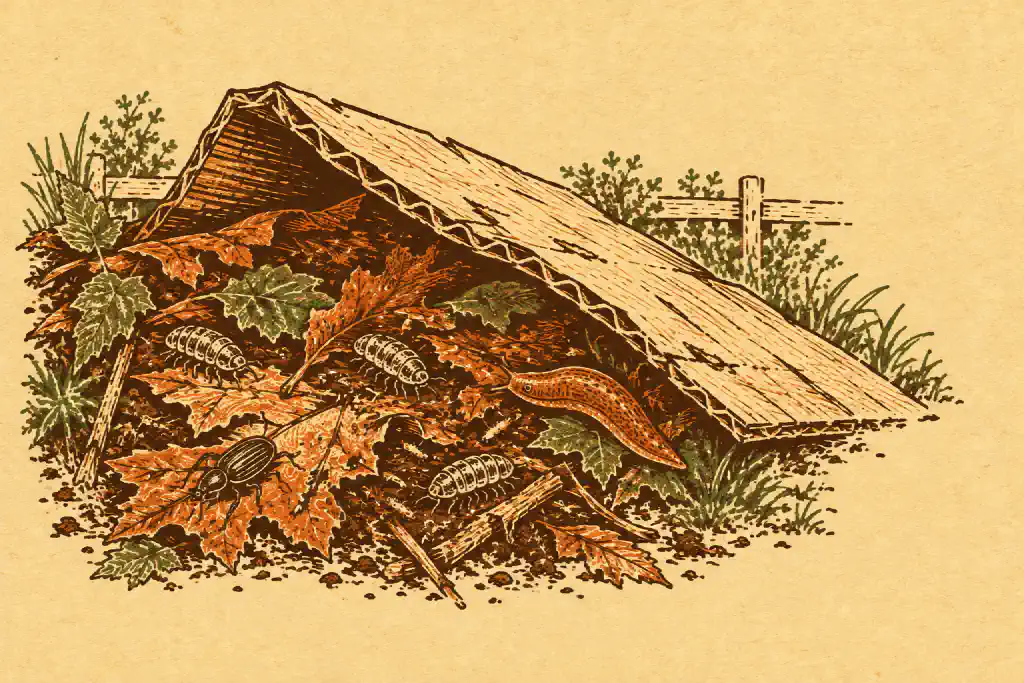
Bugs in a compost bin are normal. Pill bugs and sow bugs (roly polies; woodlice in the UK), slugs, worms and the tiny white things under the lid are nearly all eating your scraps, and finding them doesn’t mean you’re doing it wrong. A bin that’s full of them is telling you something, though, and here’s what.
Quick fix
Leave the creatures alone and fix the top layer of the bin instead:
- Squeeze a handful from just under the top. If it drips, mix in dry browns. If it’s soggy all the way through, see Compost too wet.
- Bury new scraps under 2–4 inches (5–10 cm) of browns and keep the lid on.
- Skip slug pellets and bug sprays in the bin.
Why compost bins fill up with bugs
Most creatures in a compost bin are decomposers, eating rotting plant material and the fungi and bacteria on it. Many also like it damp, so pill bugs, slugs, springtails, pot worms and fungus gnats gather where it’s moist and the food is fresh. A bin full of pill bugs or slugs usually means the top layer is wetter and fuller of fresh scraps than the rest. The finished compost at the bottom, the part that goes on your beds, has fewer. Earthworms are the one creature to be pleased about: Cornell’s composting guide says they do “the lion’s share” of the work among the larger compost creatures.
What each bug is, and what lots of them mean
Everything here can stay. The last column says what a crowd usually means; the fix for a damp top is in the steps below.
| What you see | What it is | A lot of them usually means |
|---|---|---|
| Gray and armored; some curl into a ball | Pill bugs and sow bugs | Damp top |
| Slugs, often in the fresh scraps near the top | Slugs | Too wet |
| Tiny white specks that jump when disturbed | Springtails | Damp, food-rich top |
| Tiny round crawlers with eight legs, some red-orange | Mites | Plenty to eat; nothing to do |
| Thin white worms, much smaller than earthworms | Pot worms | Damp top |
| Tiny white worms with a black head | Fungus gnat larvae | Damp top |
| Small dark flies around the bin | Fungus gnats or fruit flies | Exposed scraps |
| Fast-moving centipedes, or beetles | Predators | Nothing to do |
| Earthworms, including red, stripy red wigglers | Worms | A good sign |
| Maggots | Fly larvae | See maggots in the compost bin |
Pill bugs, slugs and the tiny ones: a closer look
Pill bugs (woodlice) in the compost bin
Pill bugs and sow bugs (together called woodlice in the UK) aren’t insects but small land crustaceans that live on damp, rotting plant material. The UK’s Royal Horticultural Society (RHS) says they don’t usually damage healthy plants, though they occasionally nibble seedlings and soft fruit such as strawberries. So keep the bin away from a seedbed or strawberry patch.
Slugs in the compost bin: good or bad?
Fine in the bin. The worry is your vegetables, and it’s fair: Cornell notes that slugs “generally feed on living plant material”. GrowVeg calls lots of slugs “an important clue – your compost may be too wet”, and says their eggs are likely to be eaten by predators such as beetles. So spread compost from the finished bottom layer.
Tiny white bugs: springtails, mites or pot worms
All three live on rotting material, and springtails and mites feed on the microbes in it. The RHS says pot worms “will not cause any damage to living plants”, though they can look like fly larvae. Fatter, segmented white grubs (not thread-thin worms) are maggots, which have their own page.
Tiny black flies: fungus gnats or fruit flies?
The RHS describes fungus gnats as dark grayish-brown flies, about ⅛ inch (3–4 mm) long, that thrive in damp, rotting material, and says “in the open garden fungus gnats are not a problem”. You don’t need to tell them from fruit flies: either way, the fix is in steps 1–2 below. If flies swarm around exposed fruit scraps, see rats, flies and ants.
Compost bin full of bugs? What to do
- Mix dry browns into the top layer. Use at least a bucket of torn cardboard, egg cartons, dry leaves, straw or non-glossy shredded paper for every bucket of scraps. Fork it through rather than laying it on top, because a dry crust does nothing for the wet layer underneath. Stop when a squeezed handful holds together without dripping.
- Bury, don’t drop. From now on, pull back the top layer, add the scraps, cover them with browns and put the lid back on.
- Leave the creatures and keep checking. GrowVeg’s advice is to “never use slug pellets or other pesticides in your compost”. Squeeze a handful every few days. As the top dries, the damp-lovers usually thin out.
If that didn’t work
- Top passes the squeeze test but the pill bugs are still there? That’s fine: they’re doing the job.
- Still wet like mud after adding browns? Work through Compost too wet.
- Maggots in there too? See maggots in the compost bin.
- Rats, ants or flies swarming around exposed fruit scraps? See rats, flies and ants.