Compost tumbler problems: balls, soggy contents, nothing happening
Compost tumbler in balls or not breaking down? It's usually too wet or topped up too often. Add dry browns, break up clumps, then give it time.
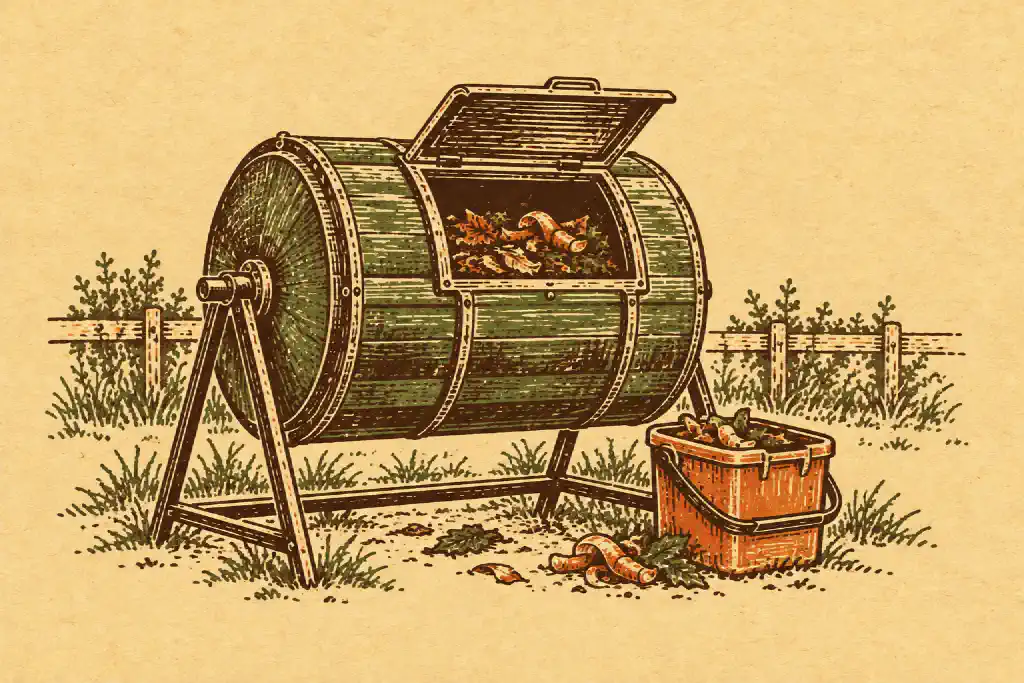
If your compost tumbler is not breaking down, or the inside has turned into soggy balls, the cause is usually water: too much of it, rolled around by every spin, in a drum that keeps getting topped up. None of that means you’re bad at composting.
Quick fix
Dry it first, then leave it to work:
- Squeeze a handful from the middle. A couple of drops is right. If water runs out, it’s too wet.
- If it’s too wet, mix in dry browns: shredded cardboard, dry leaves or straw. Use at least a bucket for every bucket of scraps, more if it still drips. Add it a little at a time, spinning to mix it in, until the squeeze test passes.
- Then spin every few days, and break up any balls by hand as you go.
- Stop adding scraps to a batch you want finished.
Damp but not dripping, and still nothing happening? Go to not breaking down below.
Compost in balls
Food scraps and grass clippings are mostly water, and Oregon State University Extension notes that a tumbler full of them leaks dark liquid. Spinning carries that water through the whole load, and wet material rolls up the way a snowball does.
Small balls are normal: r/composting’s tumbler FAQ thread says some will always form, and wetter contents clump more. The large, wet ones are the problem. Their middles can stay airless: one reader commenting on GrowVeg’s tumbler guide broke some open and found the material inside hadn’t fully broken down. That can hold a whole drum back.
One commenter in an r/composting thread, written up by The Cool Down in 2026, suggested spinning less to cut down on clumps. That works once the load is dry (Quick fix above).
Too wet: signs and drying a drum
Take your squeeze sample from the middle, not the surface, and aim for the feel of a wrung-out sponge. Slimy, bad-smelling contents also mean it’s too wet. To help a drum dry, the r/composting tumbler FAQ suggests propping the door open between spins on a dry day to let moisture out.
For how long drying usually takes, and how to tell when to stop adding browns, see Compost too wet. Skip its cover and pallet advice, which is meant for an open pile.
Smells or flies
A sour, rotten-egg or sewage smell usually means the drum is too wet and airless (see the Quick fix). A sharp ammonia smell means too many greens. Match your smell to its fix in Why your compost smells.
Fruit flies can build up more in a tumbler, because spinning brings up the scraps a pile would keep buried under browns. See rats, flies and ants for flies and maggots in the compost bin for maggots.
Not breaking down or not heating up
It keeps getting topped up. Every bucket of fresh scraps restarts the clock for that material, so composting guides say to fill the drum, then stop. With two sides, fill one while the other finishes. With one, keep new scraps in a countertop compost bin or an open pile. How long to wait is covered below.
It’s damp and smells sweet, but stays cool. That usually means too few greens. Mix in a bucket or so of greens now, in one go, rather than topping up week after week. Coffee grounds work well; skip big loads of grass clippings, which mat into wet clumps. Expect the batch to finish a little later.
Pieces are too big. Chop or shred scraps first, since shredded material balls up less. Anything still whole when you empty the drum goes back in.
It’s small, or it’s cold. A small load holds less heat, and GrowVeg calls tumblers “summer workers” that rarely heat up fully in cold weather. A drum that never gets hot still makes compost, just more slowly. Why a cool bin can still be working is covered in Compost not heating up. In winter, see composting through winter.
Three weeks? How long a tumbler really takes
“Adverts suggest that you can make usable compost in as little as three weeks,” GrowVeg notes. The claim isn’t invented. A University of Arkansas extension guide gives “as little as two to three weeks” for a drum loaded in one go, with nothing added afterwards and a turn every day. GrowVeg’s writer managed it too, with careful monitoring, but got rough compost best used as mulch.
That’s the best case for one ideal batch. A regional composting guide from British Columbia, Canada, warns against units that promise finished compost in under four weeks, and allows about six to eight weeks after the last addition. In a 2011 trial by the UK magazine Which? Gardening, reported by GrowVeg, well-filled tumblers turned three times a week took about a month longer than a pile turned once a week.
So count from the day you stopped adding. Finished compost can take longer, but if it still looks like recognizable scraps after two months of warm weather, something above is holding it back, not you.
If that didn’t work
- Still mud a couple of weeks after adding browns, with turning? It’s time for a bigger step than Compost too wet covers. The r/composting tumbler FAQ’s last resort is to spread the load on a tarp to dry, mix in more dry browns and reload.
- Damp, no smell, and still stalled a few weeks after adding greens? Check the size and cold notes above, then try a green you haven’t used yet, such as fresh weeds or tea leaves, from Browns and greens.
- Still smells after the drum has dried out? See Why your compost smells.
- Bone dry and nothing changing? See Compost too dry.
- Still not sure what’s wrong? Match what you see inside the bin.